 Truffe Blanche
37,50 €
Box of 10 piecesColette Demay
Chocolate was long the epilogue of the meal. At Colette Demay, we restore its prologue. Here are our answers to the questions we are asked most — by sommeliers, by the curious, by those who entertain.
Yes — provided it is conceived for it. An aperitif chocolate must be lightly sweetened (our recipes cap at 25% sugar), structured, and built to converse with wine rather than to close the palate. This is Colette Demay's founding speciality: our Aperturae — three truffles under grand cru couverture — are designed to open a moment, not to close it.
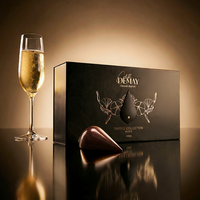
With a taut champagne — Blanc de Blancs, mineral extra-brut — you need a chocolate that extends the precision without overwhelming it: our White Truffle, placed on the tongue before the first sip. The bubble awakens the Alba white truffle, the hazelnut softens the wine's dryness. Krug, Salon or Dom Pérignon find here their first pairing. With a rosé champagne, prefer the floral sweetness of Mauve.
The tannin calls for chew and earthy notes. Our Black Truffle takes the tannin head-on: undergrowth, walnut, bitter cacao. Pomerol, Pauillac and Saint-Émilion reveal another dimension here — what remains is the earth and the fruit. The pairing also works on Hermitage, Côte-Rôtie or an evolved Nebbiolo.
Meursault, Puligny or Chassagne call for lightness: the wine's minerality cuts through the richness of the praline, and the Summer Truffle holds its own without weighing down. This is the pairing of lunches that stretch on — it also works on Chablis and brut champagne.
Smoky spirits want a chocolate that answers them. NOOR, our praline with black loomi lime, develops a smoky, saline bitterness that converses with peated single malts, artisanal mezcal and oxidative wines such as Oloroso Sherry.
Two schools. On a specialty espresso, Origin — pure praline of Tonda Gentile from Piedmont PGI — lets the clarity of each aroma express itself. For the after-dinner moment, our Espresso with Bourbon Pointu from Réunion, the rarest coffee in France, naturally low in caffeine: it never steals the night's sleep.
The chocolate of pairing does not presuppose alcohol. Cold-infused white tea with Mauve, smoky Lapsang tea with NOOR, cucumber-basil sparkling water with the White Truffle, single-origin filter coffee with the bean to bar tablets. The principle remains the same: freshness, tension, little sugar.
Between 18 and 20 °C for the praline recipes, 17 to 19 °C for the Summer Truffle. Take the chocolate out twenty minutes before tasting; keep it between 16 and 18 °C, away from light and odours.
A chocolate from a single, identified terroir, like a wine. Every Colette Demay recipe rests on a 75% grand cru dark couverture and a hazelnut praline of Tonda Gentile PGI from Cravanzana, Piedmont — recognised as the finest hazelnut in the world. Our bean to bar tablets extend this logic: Martinique, Nicaragua, Colombia, Madagascar, each origin tells its terroir.
Truffe Blanche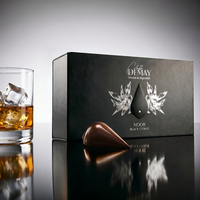 Noor
Noor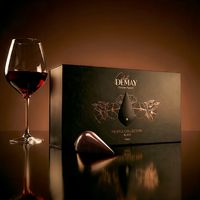 Truffe Noire